
Explore Connect Discover
Indra Jatra' Yenya Punhi '
Eight days in the heart of Kathmandu, the festival transforms the old city into a vibrant cultural landscape. Indra Jatra brings together many layers of Kathmandu's religious and cultural life
Overview
IIndra Jatra showcases the harmony traditions of Kathmandu, and into the Newar cultural heritage that has shaped the city for centuries.
During the festival, courtyards and streets
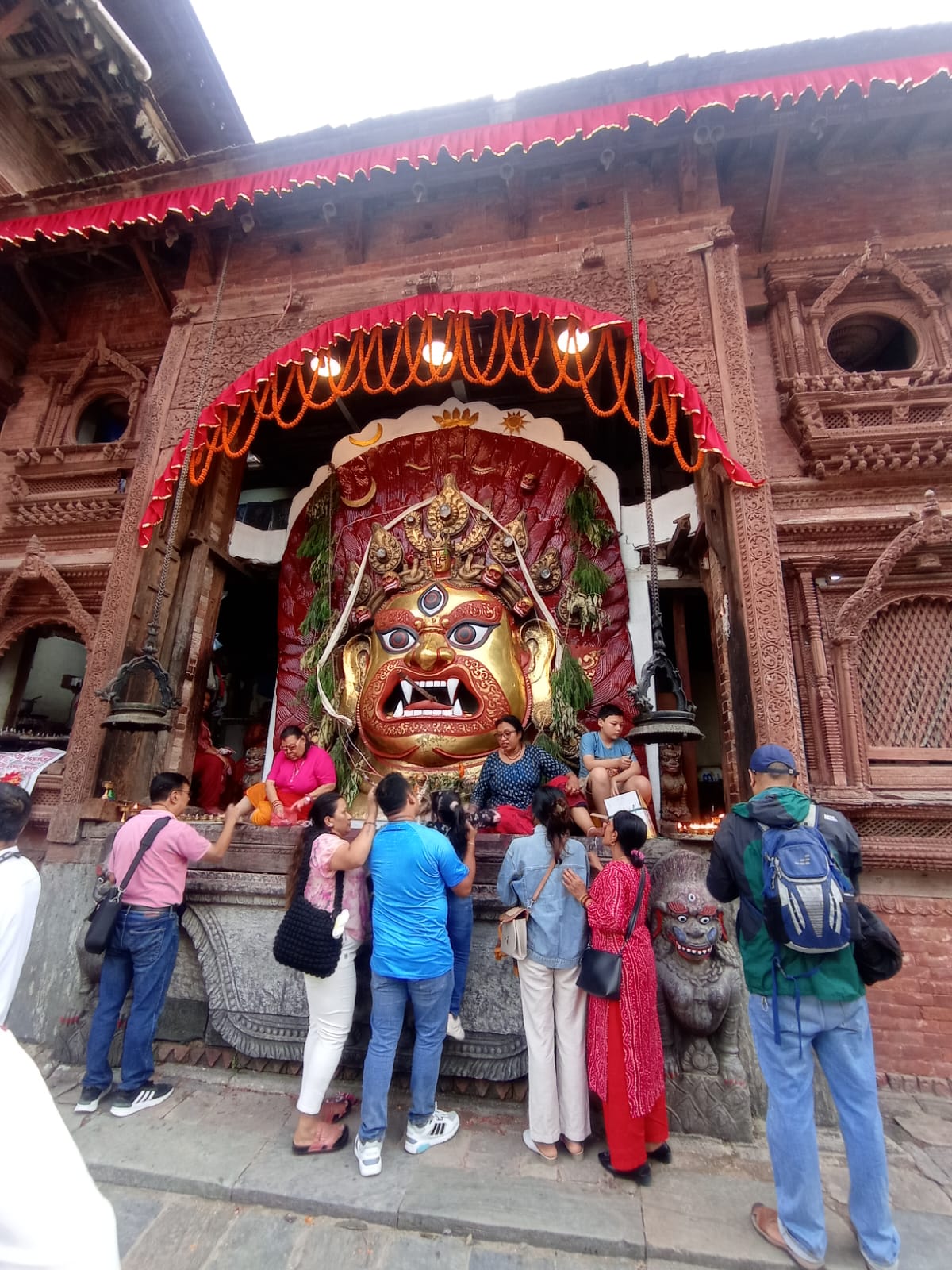
of Kathmandu come alive with chariot processions of living goddess Kumari, Ganesh and Bhairav attracts
large crowd of devotees. The folklore
god Lakhye stroll around the city, the devil god who chase away negative
and blesses with power and happiness.

From the raising of the Ya Sin at Basantapur to the chariot
processions and the lowering of the pole, each stage of the festival reveals beautiful
Kathmandu. For eight days each
year, the historic heart of Kathmandu becomes a living theatre of faith, ritual
& beliefs, remembrance, devotion, music, dance, and gatherings of families
and communities.
This festival is celebrated in honor of Indra, the King of
Heaven and god of rain, and reflects the importance of rain for agriculture
and harvest. Legend says that Indra, King of Heaven descending to Kathmandu to take Parijata flowers for his mother. According to the legends, local people caught and tied
him at the center of Kathmandu. And Pulu Kisi, his divine elephant,
searched him while tied on top at center of Kathmandu.
Indra Jatra is perfect time to experience Kathmandu, at its most beautiful time, a place where ancient traditions is practiced, showcased, celebrated, and passed from one generation to the next.
Note: Festival dates vary each year according to the lunar calendar.
Highlights
The key moments and cultural encounters of this journey.
- The Raising of Ya SinWitness the ceremonial raising of the traditional wooden pole at Basantapur, marking the beginning of Indra Jatra.Kumari Chariot ProcessionExperience the procession of the Living Goddess Kumari, accompanied by the chariots of Ganesh and Bhairav, through the historic streets of Kathmandu.Lakhey, Pulu Kisi & Traditional DancesEncounter Kathmandu's traditional masked dances, music, drums, and performances that bring the old city alive during the festival.Swet Bhairab & Akash BhairabDiscover the sacred displays of Bhairab that become prominent during the festival, revealing another layer of Kathmandu's religious traditions.Ancestors & Community RitualsObserve the rituals, offerings, butter lamps, and traditions through which families honor ancestors and remember loved ones.Kathmandu's Living HeritageExplore the temples, courtyards, alleys, shrines, and neighborhoods that form the cultural landscape of the historic city.
Itinerary
- Day 01: Day 1 — Arrival in Kathmandu
- Day 02: Day 2 — Festival Begins & Ya Sin
- Day 03: Festival Rituals & Traditions
- Day 04: Indra Jatra & Dāgī Procession
- Day 05: Yenya Punhi & Thaneyā
- Day 06: Festival Rituals & Traditions
- Day 07: Free Day
- Day 08: Free Day
- Day 09: Nānichāyā & Festival Closing
- Day 10: Departure
Day 01 — Arrival in Kathmandu
Arrive in Kathmandu and settle into the historic rhythm of the city. Meet your guide and receive an introduction to Indra Jatra, its history, traditions, and the experiences ahead.
Day 02 — the Festival Begins
Begin exploring the historic heart of Kathmandu as Indra Jatra gets underway. Experience the raising of the Ya Sin and discover the rituals and traditions that mark the opening of the festival.
The evening offers an opportunity to observe Kathmandu's historic shrines, courtyards, and streets illuminated during the celebrations.
Day 03 — Kathmandu's Living Heritage
Explore the cultural landscape of the Kathmandu Valley through its historic squares, temples, courtyards, architecture, and neighborhoods.
This day provides context for understanding the communities and traditions behind the festival.
Day 04 — Kathmandu in Celebration' Indra jatra'
Experience one of the most significant moments of Indra Jatra—the chariot procession of Kumari, accompanied by the chariots of Ganesh and Bhairav.Immerse yourself in the atmosphere of Indra Jatra as traditional music, drums, masked dances, sacred displays, and community celebrations unfold across the old city.
Our guide helps you understand the rituals and stories behind what you encounter.
Day 05 — Kathmandu in Celebration' Yeya Punhni
Experience one of the most significant moments of Indra Jatra—the chariot procession of Kumari, accompanied by the chariots of Ganesh and Bhairav.
The procession moves through the narrow streets of historic Kathmandu as devotees gather to pay homage.
Day 06 — Kathmandu's Living Heritage
Explore the cultural landscape of the Kathmandu Valley through its historic squares, temples, courtyards, architecture, and neighborhoods.
This day provides context for understanding the communities and traditions behind the festival.
Day 07 — Kathmandu beyond the Crowds
Take a quieter day to explore another side of Kathmandu or the surrounding valley.
Discover local neighborhoods, traditional architecture, food, crafts, and everyday life away from the busiest festival areas. travel to Nagarkot
Day 08 — Free day
After breakfast return back to kathmandu for free day,
Day 09 — final day of Indra Jatra
Experience the final celebrations of the festival and the closing rituals surrounding the Ya Sin.
The festival concludes with the ceremonial lowering of the pole bearing Indra's flag.
Day 10 — Departure
Today we transfer you for your onward journey or continue with your next Mountain Mandala experience.
Price
- Accommodation
as specified in the itinerary
- Experienced
local guide
- Festival and
cultural experiences specified in the itinerary
- Ground
transportation as specified
- Breakfast
and meals as specified
- Applicable
entrance fees
- Basic
first-aid and emergency support
- International
flights
- Nepal visa
fees
- Personal
expenses
- Travel
insurance
- Meals and
activities not specified in the itinerary
- Tips and
gratuities
- Any
additional expenses arising from circumstances beyond our control
Preparation
Local
Guidance:
An experienced local guide accompanies you throughout the festival, helping you
navigate busy areas, understand the ceremonies, and stay together during major
processions.
Crowds
& Walking:
Indra Jatra takes place in the narrow streets and historic courtyards of
Kathmandu and can attract very large crowds. Expect considerable walking and
standing, particularly during major processions. Comfortable footwear is recommended.
Respectful
Participation:
Indra Jatra is a living religious tradition. We follow local guidance regarding
photography, sacred spaces, ceremonies, and appropriate participation.
Flexibility:
Festival schedules, procession routes, crowd conditions, and access to
particular areas can change. Our itinerary therefore remains flexible and may
be adjusted according to local circumstances.
Community & Sustainability
Indra Jatra belongs first and foremost to the communities of Kathmandu. It is a living religious and cultural tradition rather than a performance created for visitors. Our approach is to experience the festival with respect for its sacred spaces, local customs, and the people who continue to sustain these traditions.
We encourage
responsible participation, meaningful local interaction, and sensitivity when
photographing ceremonies, performers, devotees, and sacred activities.
Indra Jatra is
energetic, colorful, crowded, and deeply immersive.
What to Expect?
- Traditional
music and drums
- Masked
dances and street performances
- Chariot
processions
- Religious
ceremonies and rituals
- Sacred
displays
- Oil lamps
and decorated historic spaces
- Crowded
streets and courtyards
- Considerable
walking and standing
- Opportunities
to interact with Kathmandu's living cultural heritage
This is not a
conventional sightseeing experience. It is an opportunity to experience
Kathmandu while its communities are actively celebrating, worshipping,
remembering, and continuing traditions passed down through generations.
FAQs
When is Indra Jatra celebrated?
Indra Jatra
follows the lunar calendar and is generally celebrated in August or September.
The festival itself lasts eight days.
How crowded is Indra Jatra?
The major
processions can attract very large crowds, particularly around Basantapur,
Hanuman Dhoka, and the historic center of Kathmandu.
Can visitors see the Kumari?
Visitors will see
the Living Goddess Kumari at Kumari Ghar and during the festival's chariot
procession.
Can I take photographs?
Photography is
possible in many public areas. However, visitors should follow local guidance
and respect restrictions around sacred rituals, ceremonies, and people engaged
in worship.
How much walking is involved?
Expect
considerable walking and standing, especially during major festival events and
processions. Comfortable walking shoes are recommended.
Is Indra Jatra suitable for families?
Yes. Families can
enjoy the festival, although participants should be comfortable with crowds,
noise, walking, and periods of standing.
Will the itinerary change?
The program may
be adjusted each year according to the official festival calendar, procession
timings, crowd conditions, weather, and local arrangements.
What should I wear?
Comfortable
clothing and walking shoes are recommended. Modest clothing is appropriate when
visiting temples, shrines, and other religious spaces.