
Explore Connect Discover
Lumbini to Lo-Manthang
From the Birthplace of lord Lumbini, through the hills to the Kali Gandaki Valley, to the high mountain landscapes, ancient villages and Tibetan Buddhist culture of Mustang.
Overview
At a Glance
Duration: 20 Days
Extended Journey: 24–30 Days
Maximum Elevation: Approx. 3,800–4,000 m
Difficulty: Moderate to Challenging
Best Season: Spring & Autumn
Start: Lumbini
Finish: Pokhara
Travel Style: Jeep + Walking + Trekking
Accommodation: Hotels + Tea Houses + Homestay + Monasteries/Camping
This journey showcases Nepal through its changing cultures, people and breathtaking landscape. Beginning from the Tarai plains of Lumbini, we gradually travel north through the mid hills and along the Kali Gandaki river enter the orchards and villages of Lower Mustang before reaching the dry mountain landscapes and Tibetan Buddhist culture of Upper Mustang. The journey reaches Lo-Manthang and continues to the sacred landscape of Muktinath before ending in Pokhara.
Lumbini to Lo-mangthag is spiritual, diverse, natural journey starting after paying homage to Lord Buddha at his birthplace, from here this journey gradually moves north through Nepal's remarkable geographical and cultural transitions. From the lowland Tarai, we travel through the middle hills and traditional farming communities before following the Kali Gandaki River towards Mustang.
Along the way, the landscape changes with every turn—from green fields and forested hills to deep river valleys, mountain settlements and the dry arid landscapes of the Himalaya. With these changes come different ways of living, from farming communities in the hills to settlements shaped by the dry mountain environment of Mustang. We pass through Parbat, Beni and Lower Mustang, experiencing villages, local traditions, riverside landscapes and the apple orchards of Marpha.
The journey also offers an opportunity to experience Buddhism in different forms and settings. It begins in Lumbini, connected to the life and teachings of the Buddha, and gradually moves into the Himalayan Buddhist traditions of Mustang, where monasteries, prayer flags, sacred landscapes, ancient caves and village life continue to shape everyday culture and spiritual practice.
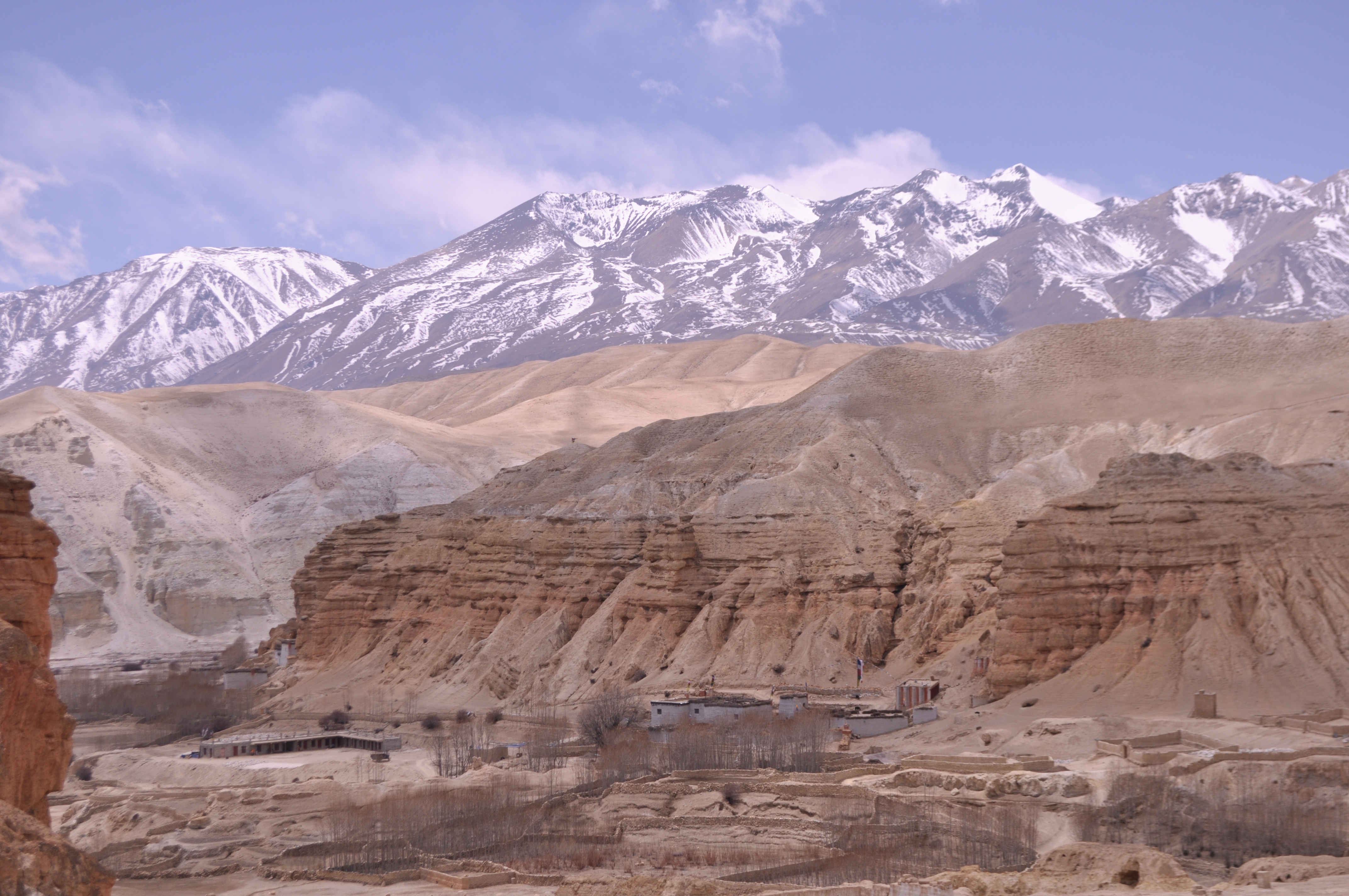
Beyond Kagbeni, the landscape changes different. As we Enter Upper Mustang, we encounter a landscape shaped by altitude, wind and its location in the rain shadow of the Himalaya. Ancient caves, monasteries, walled settlements, cultivated fields and Tibetan Buddhist traditions offer glimpses into a culture and way of life that has evolved over centuries in this remote mountain region.
The journey reaches Lo-Manthang, the historic walled city at the heart of Upper Mustang, before turning south towards Muktinath, one of the Himalaya's important sacred landscapes, revered by both Hindus and Buddhists.
More than a journey from the plains to the high Himalaya, this is an experience of Nepal in transition—from fertile lowlands to arid mountain valleys, across changing landscapes and altitudes, and through different communities, cultures, faiths and ways of life. It is also a journey through different expressions of Buddhism, from its connection to the Buddha's birthplace in Lumbini to the living Himalayan traditions of Mustang.
From approximately 150 metres in Lumbini to nearly 4,000 metres in Mustang, the journey brings together many of Nepal's landscapes, cultures and stories in one experience—revealing how land, people, culture and faith are deeply connected.
Preparation
This is a journey combining road travel, walking and trekking, rather than a continuous trek.
We use local roads and jeeps where they allow us to reach remote areas, while walking sections give us time to experience villages, landscapes and communities more closely.
Accommodation ranges from hotels and tea houses to homestays, monasteries and camping, depending on the location and style of the journey.
Lumbini -The Beginning
Our journey starts in the birthplace of Buddha. We explore the sacred sites of Lumbini and its surrounding villages, experiencing both its spiritual importance and the everyday life of the Tarai.
Through the Hills
Travelling north, we move gradually from the plains into Nepal's middle hills. The changing elevation brings changes in vegetation, agriculture, architecture, language and culture.
Lower Mustang
Following the Kali Gandaki, we enter Mustang through Beni. The landscape becomes drier as we approach Marpha, Jomsom and Kagbeni, with apple orchards, farming villages, monasteries and spectacular mountain views along the way.
Upper Mustang & Lo-Manthang
Beyond Kagbeni, the landscape becomes increasingly arid. Ancient caves, villages, monasteries and carefully cultivated fields reveal how communities have adapted to this high mountain environment. We continue to Lo-Manthang, the historic walled settlement and cultural centre of Upper Mustang.
Muktinath
Returning south, we visit Muktinath, a sacred landscape shared by Hindu and Buddhist traditions, before continuing toward Pokhara.